Tag: kashmir shaivism

  • Abhinavagupta Quotes

    Abhinavagupta (950-1020, Kashmir, India) was one of the most powerfully insightful, deeply profound and logically-clear philosophers of the reality of Living Unbound that the world has ever known. However, he is not at all widely known outside of the circles that his work has touched directly, namely the non-dual Shaivism of Kashmir and certain Indian disciplines of poetics and aesthetics.

    Here are some quotes from Abhinavagupta on the simple reality of Living Unbound that is the true nature of everyone, the ground of being of pure, liberated awareness underlying “accumulated multiplicity” as Abhinavagupta terms it.

    This bliss is not like the intoxication of wine or that of riches, nor similar to union with the beloved. The manifestation of the light of consciousness is not like the ray of light from a lamp, sun or moon. When one frees oneself from accumulated multiplicity, the state of bliss is like that of putting down a burden; the manifestation of the Light is like the acquiring of a lost treasure, the domain of universal non-duality.

    Nothing perceived is independent of perception and perception differs not from the perceiver, therefore the universe is nothing but the perceiver.

    **

    Philosophy is an elaboration of different kinds of experiences. The abstractions of high-grade metaphysics are based on spiritual experience and derive their whole value from the experiences they symbolize.

    **

    Relative distinction between two realities is not impossible. This is the doctrine of Supreme Unity in which in which relative distinction is neither shunned nor accepted. While there is an external difference between phenomena, there is none inwardly.

    **

    The existence or non-existence of phenomena within the domain of the empirical cannot be established unless they rest within consciousness. In fact, phenomena which rest within consciousness are apparent. And the fact of their appearing is itself their oneness with consciousness because consciousness is nothing but the fact of appearing.

    **

    The group of subjects, the various means of knowledge, the multiple kinds of knowledge and the objects of knowledge – all this is consciousness alone. The Supreme Goddess is the absolute freedom of consciousness which assumes all these forms.

    **

    Both characteristics, unity and diversity, are found in that which does not fall to the level of an object but which, because it is consciousness, is the supremely real Light. It has only one characteristic, namely, consciousness which is the perfect medium of reflection. This is what experience tells us.

    **

    The truth is therefore this: the Supreme Lord manifests freely all the varied play of emissions and absorptions in the sky of his own nature.

    **

    The Light is the supreme reality that encompasses all the categories from Earth to Paramasiva, while the unfolding of the reflective awareness of the Heart of I consciousness within it, distinguishes between them.


    **

    Absolute consciousness is manifest here in every circumstance of daily life because it is everywhere full and perfect. Consciousness is said to be the cause of all things because it is everywhere emergent as each manifest entity.

    **

    The extremely pure conscious reality transcends all talk of succession and its absence.

    **

    Immersing himself in the supreme reality, clearly aware that consciousness is all things, the yogi’s consciousness vibrates. This vibration is the Great Pervasion.

    **

    The yogi should abide firmly fixed in his own nature by the power of the exertion of his expanding consciousness. Thus he is established on the plane of Bliss relishing the objects of sense that spontaneously appear before him. Perfected yogis (siddha) , are ever steadfast in this, the Supreme Gesture (mudra), the perfect and unobstructed expansion of the awakened.

    **

    The couple (yamala) is consciousness itself; the unifying emission and the stable abode. It is the absolute, the noble cosmic bliss consisting of both (Siva and Sakti). It is the supreme secret of Kula (the ultimate reality); neither quiescent or emergent, it is the flowing fount of both quiescence and emergence.

    **

    The variety of this world can only be manifested if the Highest Lord, Who is essentially the pure light of consciousness, exists; just as a surface is necessary for a picture.

    **

    Other achievements are in vain if one has missed the supreme reality, the Self. But once one has attained this reality there is nothing left that one could desire.

    **

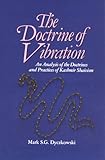
    Source: by The Doctrine Of Vibration By Mark S. G. Dyczkowski

    For more on Kashmir Shaivism, please see the Living Unbound Kashmir Shaivism Resource Page.
  • The Integral Wholeness Of Awareness

    The Awareness level is where we experience all as oneness, and the oneness as our self. This becomes somewhat easier to comprehend, when we recall that all the conceptual division with which we used to experience life was utterly artificial. In the absence of this conceptual division, reality is one; self is one; self is Living Unbound.

    “Caitanyamatma” – “Living Unbound Awareness is Self”, as the Shiva Sutras (1.1) begin.

    This cannot be understood with mind, even the infinitely expanded mind experienced at the upper range of the Knowing level; it can only be experienced – in, with and as original, unbound awareness; our self. Why is this so? Because understanding is usually understood and experienced by limited-mind as an object in awareness, an object that is the knowledge of the subject who holds it.

    However, “Knowledge is Bondage” (Jnanam Bandhah) as the Shiva Sutras (1.2) succinctly remind us. Knowledge is bondage, because knowledge is an object; objects create subjects, subjects create objects. At the Awareness level, we are experiencing the single field of awareness prior to all division.
    Knowledge is bondage — Knowing is not; knowing is liberation. Knowing is experiencing. Knowing is experiencing in actuality. In actuality, all is one; Knowing is Unity.

    As Yogani says in Advanced Yoga Practices (AYP) Main Lesson 399:

    “From the perspective of the individual, thoughts are only omnipresent when consciously released in omnipresent abiding inner silence, which is cultivated through deep meditation. Before that, thoughts are only objects of perception with which we are identified locally. It is the samyama effect (release in stillness) that enables thought to become omnipresent, and therefore infinite in speed.”

    Again, this cannot be understood with mind, because mind is inherently constrained in some manner; even the formless aspects of it contain consciousness and action, even if effectively infinite in scope. Only when our original Awareness preceding mind is  experienced as our self, with mind as its emanation, does the power of knowing, the knowing of power, begin to flourish creatively, to flow out and return as Living, Unbound.

    Yogani continues:
     

    “Before the samyama effect, a thought is like a picture. After the samyama effect, a thought is the thing itself, and far more influential via the infinite creative energy of divine outpouring that occurs when the mind is surrendered in stillness.”

    When the mind is surrendered in stillness, there is no barrier to the universal open shining of our original awareness, our infinite self. Infinite? Infinite: all distinctions, definitions, borders and limits are artificial. Original awareness is inherently ever unbound.

    “A thought is a thing in itself.”

    When we contemplate this, our mind cannot even begin to understand, because limited mind is a cutting instrument; it divides, decides, discriminates. A thought is a thing in itself, because there is no natural division in awareness; awareness is wholeness. Whether awareness is experiencing the inner silence of the experiencing subject-self that is original awareness, or experiencing its movement as knowing and acting oscillations of awareness, or experiencing the perfect balance of the two as a human, being: there is only awareness here.

    And so, a thought is not only a thing in itself, a thought is our very self; awareness in form, arising from formless self-awareness. Experiencing this in actuality does not allow us to understand, for we are now beyond the range of understanding, but to be knowing, that creating the samyama effect is creating a ripple in the infinite lake of our self. Utterly simple. Infinitely powerful. Solely loving. Is this teaching (“A thought is a thing in itself”) unique to Yogani? Not exactly; it has been around for thousands of years, and is considered so profound an aspect of reality that it is deeply embedded in some of the oldest languages and spiritual traditions in the world. For instance, In Hebrew, the word davar means both word and thing:

    “Though davar means both thing and word in Hebrew, it is crucial to point out that thing did not have the Greek connotations of substance. As I. Rabinowitz puts it: ‘the word is the reality in its most concentrated, compacted, essential form.’ …. Names are not conventional, but are intrinsically connected to their referents; the name, indeed, is the real referent of the thing, its essential character – not the reverse, as in Greek thought. One does not pass beyond the names as an arbitrary sign towards a non-verbal vision of the thing, but rather from the thing to the word, which creates, characterizes, and sustains it. Hence davar is not simply thing, but also action, efficacious fact, event, matter, process.”
    ~Leonora Leet, Secret Doctrine of the Kabbalah, p. 103, quoting Susan R. Handelman

    There is a teaching which is essentially identical (to the teaching described above, via the Hebrew word davar) in Kashmir Shaivism, the non-dual, practices-centric tradition of Kashmir (as Kabbalah is the non-dual, practices-centric tradition within the framework of Judaic spirituality).

    In The Secret Supreme, the Kashmir Shaiva master Swami Lakshmanjoo describes Sadadhvan, the Sanskrit term for the six-fold path of creation in the Universe, consisting of three subjective paths of increasing subtlety, and three objective paths of increasing subtlety. In explaining an example relating to the middle (subtle) level, Swami Lakshmanjoo states:

    “The word pot is the vacakadhva (creator) for this object (pot). So this object (pot) is vacya (created) and its vacaka (creator) is the word pot.”

    ~Swami Lakshmanjoo, The Secret Supreme, p. 13

    The one field of awareness from one angle, is everything: all-that-is, from another angle; two sides of the same coin. Oneness and multiplicity are the inverse of one another. Mind cannot understand this; it is not designed to do so: mind is a sense, not a self.

    The wholeness of awareness is infinite; the distinctions of form are finite; the perfect balance of the two is to be a whole, liberated human, being; to be Living Unbound. A paradox? From the standpoint of the distinctions of limited mind, yes; from the wholeness of awareness, no. Experiencing the actuality of the wholeness of awareness (aka the awareness of wholeness), the unity of knowing (the knowing of unity), and the harmony of living (the living of harmony) is to resolve all paradoxes, and to enjoy Living Unbound; the ever-present freedom we each and all ever are now, right here, beyond and before imagination.

    No less an authority than esteemed mathematician (and co-author of the Penrose-Hameroff Theory of Quantum Consciousness), Sir Roger Penrose states:

    “Calculus– or, according to its more sophisticated name, Mathematical Analysis– is built from two basic ingredients: differentiation and integration. The remarkable fact, referred to as the fundamental theorem of calculus, is that each one of these ingredients is essentially just the inverse of the other. It is largely this fact that enables these two important domains of mathematical study to combine together and to provide a powerful body of understanding and calculational technique.”
    ~Sir Roger Penrose, The Road To Reality — A Complete Guide To The Laws Of The Universe, p. 103

    And likewise, it is the fact that the wholeness of awareness and the harmony of living are bridged by the unity of knowing, which allows for the ongoing celebration in experience known as Living Unbound. The Wholeness of Awareness and the Harmony of Living are the inverse of one another — exactly as the integral and differential described above in Penrose’s quote are the inverse of one another. The Unity of Knowing bridges the infinite division between the Wholeness of Awareness and the Harmony of Living, exactly as the fact and understanding of inverse relationship (between integral and differential, in Calculus) bridges the apparent differences between the two, which are also actually just the inverse of one another; the same reality experienced from different angles, with different degrees of focus. Most of us feel bound and limited because most of us only experience and know the differential, the finite, the limited, the local. Most of us are missing the knowing-experiencing of our true self, the integral: the whole, the infinite, the limitless.

    Self is Unbound, Self is Living; Self is Living Unbound.

    What is the result of experiencing our self as the wholeness of awareness, Living Unbound?

    “The universe is our playground when we are reborn in the divine flow resulting from the marriage of abiding inner silence and our ecstatic awakening. We are here, everywhere, and nowhere. Free!”
    ~Yogani


    Related Lessons:

    Level 3 Teachings

    Level 3 Techniques

    Living Unbound Resource

    Related Resources:

    Source of the above pictures : http://www.irishviews.com/purple-sky-backgrounds.html